Dawood Ibrahim
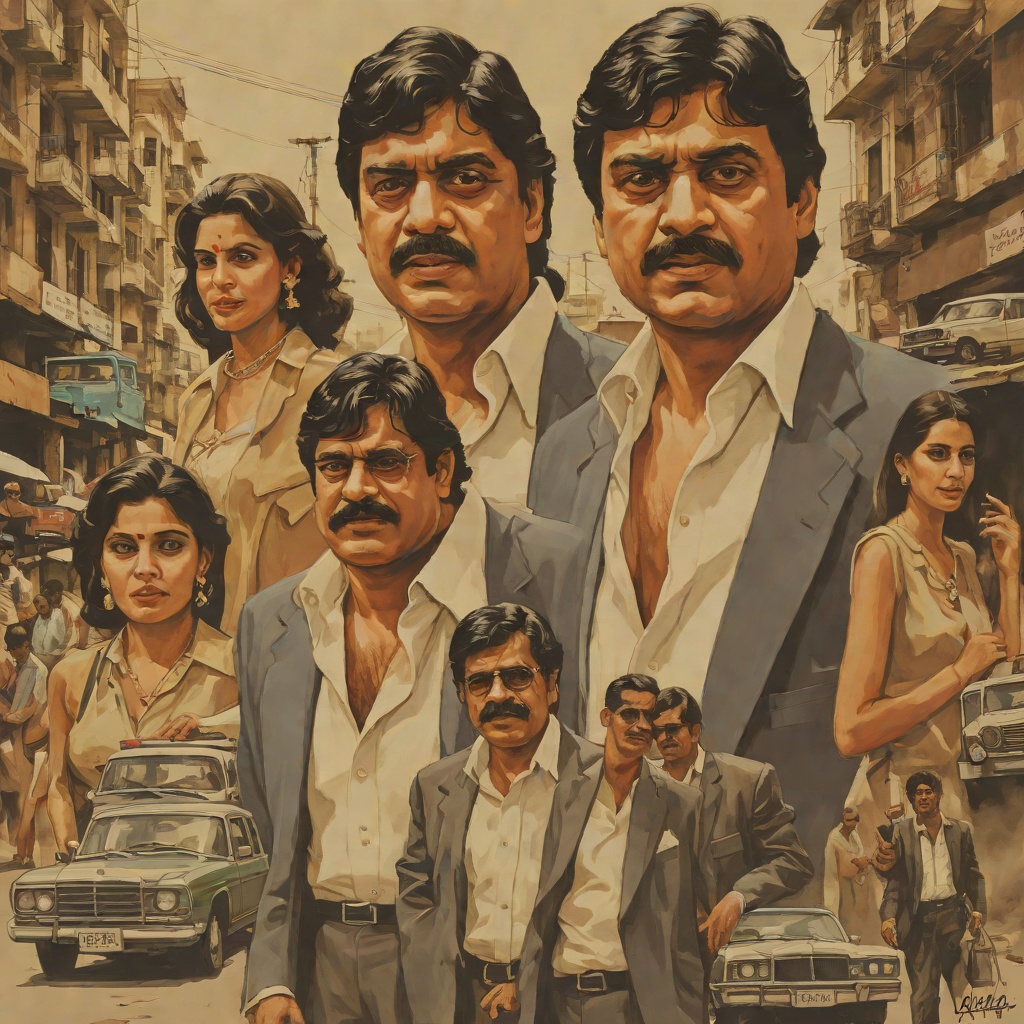
Mafia Queens of MumbaiDawood Ibrahim looms over Mafia Queens of Mumbai as the supreme, almost mythic, power of the city's underworld. He is the figure against whom the book's women are measured and to whom their fates are often tethered, whether as a target of revenge, a source of fear, or a name that defines the upper echelon of crime. The book charts his evolution from a young man in the shadows to the orchestrator of killings, presenting him as the ultimate arbiter of life and death in the criminal world that the women inhabit.
Rise from Petty Crime to Mafia Supremacy
The book first encounters Dawood not as a don but as a young man in his twenties, a resident of Mussafir Khana near Dongri junction, struggling to make his mark. He is described as just another wannabe gangster, indulging in petty extortion alongside his brother Sabir, and trying desperately to get the attention of the mafia bigwigs. His life at this stage is precarious, often forced into hiding to evade the police. This early portrait is crucial, as it establishes the context for his later power. The shrewd Jenabai Daaruwali, a formidable figure in her own right, is said to have made notorious ganglords like Karim Lala, Haji Mastan, and 'our own' Dawood Ibrahim dance to the movement of her fingers, like a conductor of a big philharmonic orchestra. This suggests that even as he rose, Dawood was part of a complex web of influence, where figures like Jenabai could claim a degree of authority over him, a dynamic that would later be replaced by his absolute dominance.
The Orchestrator of Murder and Terror
Dawood's power is most starkly demonstrated through his capacity to order killings, often from a distance, using the state's own apparatus as a weapon. The murder of Mehmood Khan is a chilling example. After Mehmood refused to do some work that Dawood had told him to, Dawood decided to have him killed. He orchestrated the murder by tipping off the cops about Mehmood's arrival, leading to a fake encounter at Santa Cruz airport. The motive was to make an example of Mehmood, to ensure that others wouldn't make the same mistake. This act of using the police to carry out a personal vendetta reveals the depth of Dawood's reach and his cynical manipulation of the system. His terror is not limited to men; it extends to women who dare to challenge him. Sapna, the wife of Mehmood, dedicated herself to avenging her husband, assembling a group of Muslim youth to fight against Dawood, whom she saw as a stigma to the Muslim community. Her audacious plan to assassinate him at the Sharjah Cricket Association Stadium, during an India-Pakistan cricket match, was a direct challenge to his supremacy. Dawood's response was brutal and exemplary. His men, along with those of Chhota Shakeel, barged into her home in Hujjrah Mohalla and subjected her to an extreme level of torture, deliberately targeting her breasts and vagina with over twenty-two stab wounds, leaving her flesh riddled with wounds. The message was clear: anyone who dared to even think of taking on Dawood would be made an example of, in the most horrific way possible.
A Name That Defines the Underworld's Reach
Dawood's name functions as a benchmark of criminal notoriety, a point of reference for those both inside and outside the underworld. For Monica Bedi, the name was a revelation. When she learned that her lover, Arsalan, was actually Abu Salem, a gangster with underworld connections, she was stunned. She had only heard about Dawood Ibrahim and Chhota Shakeel, and had never heard of Abu Salem. This detail underscores Dawood's status as the most famous criminal in the public imagination, the standard against which all other gangsters are measured. His influence is also felt in the city's geography and its history. The book's narrative is steeped in the locales of Mumbai, from the Bada Qabrastan cemetery near Marine Lines to the slums of Sion-Koliwada and Sonapur Lane, all of which form the backdrop for the criminal networks that Dawood controls. The fear of his name is so pervasive that even in death, his legacy is marked by a strange reverence, as seen in the apocryphal story of his father, Ibrahim Kaskar, a police constable, whose grave was showered with truckloads of rose petals for three days, the fragrance wafting across the graveyard. This anecdote, whether true or not, speaks to the awe and terror that Dawood inspires, a power that extends even to the memory of his family.
The Unseen Hand in the Lives of Women
While Dawood rarely appears directly in the book's stories, his presence is a constant, unseen hand that shapes the lives of the women. The book's narrative, which focuses on the women of the underworld, is framed by the violence that Dawood's world generates. The murder of Neeta Naik, for instance, is a story of domestic violence and jealousy, but it is also a story of the criminal world that her husband, Ashwin Naik, inhabited, a world where Dawood's name is a source of power and fear. The book's portrayal of Dawood is not that of a charismatic anti-hero but of a distant, malevolent force. He is the reason why women like Sapna become avengers, why men like Abu Salem hide their identities, and why the city of Mumbai lives under a shadow of organized crime. He is the ultimate symbol of the patriarchal, violent power that the women in the book must navigate, resist, or succumb to. His story, as told through the lives of others, is a testament to the immense, destructive reach of the Mumbai underworld, a world where a single order from a man in hiding can end a life or shatter a family.